About Pine Grove Furnace
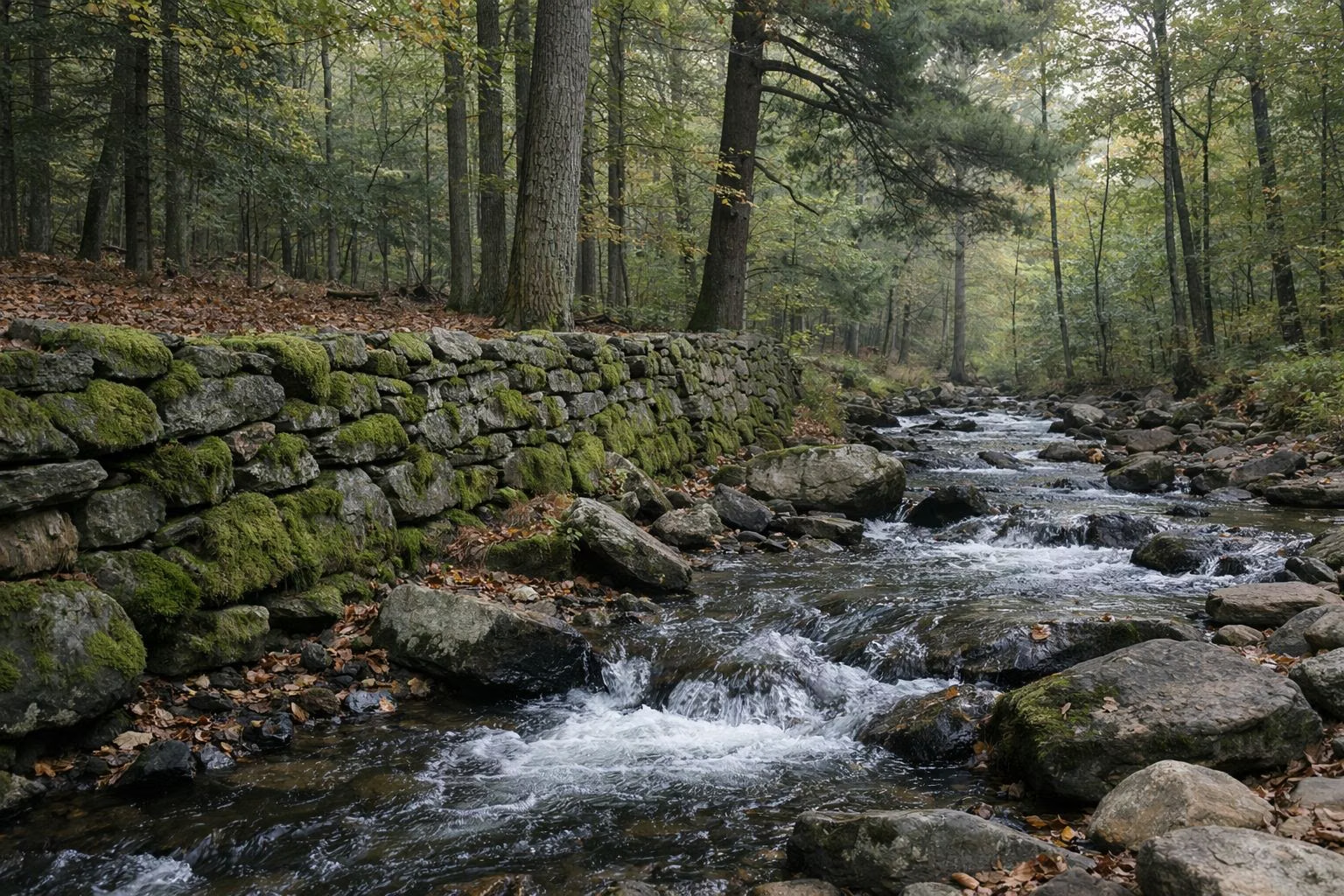
Pine Grove Furnace State Park is a 696-acre Pennsylvania state park on South Mountain, at the northern tip of the Blue Ridge Mountains, near Gardners in Cumberland County. It grew out of an iron-making village: Pine Grove Furnace was built in 1764 and made iron until 1895. Today the park is known for two swimming lakes, Laurel Lake and Fuller Lake, a stretch of the Appalachian Trail near its midpoint, a rail trail and the Appalachian Trail Museum. Michaux State Forest surrounds it on every side.
The Park at a Glance
The Iron Furnace Years
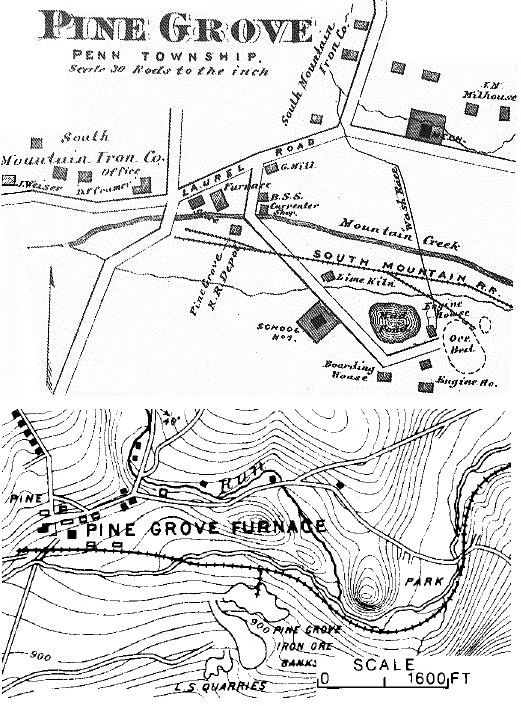
In 1764, partners George Stevenson, Robert Thornburgh and John Arthur built an iron furnace along Mountain Creek and named it Pine Grove Iron Works. It cast ten-plate stoves, fireplace backs and iron kettles, and possibly munitions during the American Revolution.
Michael Ege, a Cumberland County iron owner, bought the works in 1782. His son Peter Ege inherited it, built a red brick mansion for his wife Jane in 1829 (today's Ironmaster's Mansion), and added Laurel Forge in 1830 to turn cast iron into wrought iron.
The financial panic of 1837 bankrupted the works. At a sheriff sale the next year, Frederick Watts and Charles Bingham Penrose bought it; DCNR notes that Watts went on to found Penn State University in 1855.
Jay Cooke, Jackson Fuller and the Last Blast
In 1864, Jay Cooke and Company bought the iron works, formed the South Mountain Iron Company and put Jackson C. Fuller in charge of daily operations. The company built the South Mountain Railroad to haul raw materials in and iron out. Its old railbed is now the Hiker Biker Trail.
After Cooke's banking house failed, the railroad and iron works were sold separately in 1877, and Cooke, through Fuller, bought back the iron works as the South Mountain Mining and Iron Company. Engineer John Birkinbine renovated and enlarged the furnace in the winter of 1878, and in its peak year, 1883, it produced 6,000 net tons of iron. New technologies were putting small iron producers out of business, and Pine Grove Furnace went out of blast in 1895, ending 131 years of iron making on South Mountain.
Fuller also tried other uses for the land, DCNR's guide says: an amusement park (1878 to 1900), natural ice harvesting at Laurel Forge Pond (1879 to the 1920s) and commercial brickmaking (1892 to 1907).
From Iron Works to State Park
In 1913, the 17,000-acre Pine Grove Iron Works property was sold to the Commonwealth of Pennsylvania for its new forest reserve system. Most of it became Michaux State Forest; part became Pine Grove Furnace State Park.
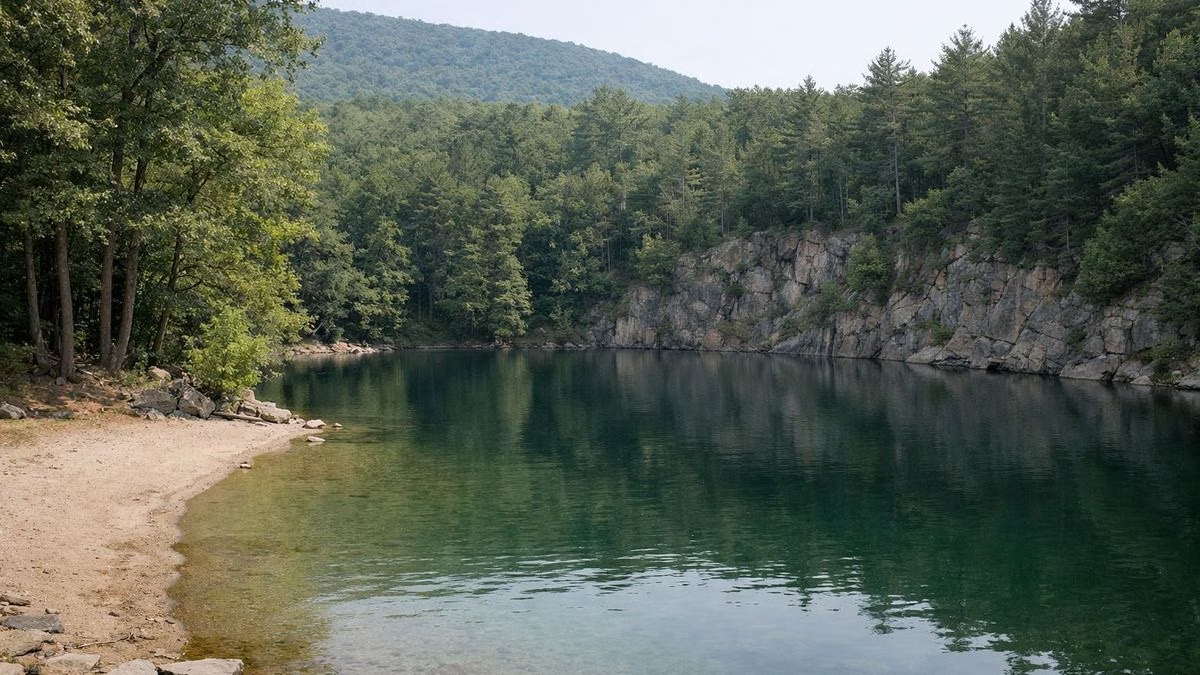
The two lakes came straight out of the industrial past. Fuller Lake was an iron ore quarry that filled with groundwater when mining stopped. Laurel Lake supplied water power for Laurel Forge.
In 1933, the Civilian Conservation Corps set up Camp S-51-PA nearby, known today as Camp Michaux. The CCC crews built roads, trails and facilities until 1941.
What Still Stands
DCNR lists these surviving buildings from the iron community:
- The stone furnace stack
- The Ironmaster's Mansion
- The clerk's office (now the Paymaster's Cabin, a rental cabin)
- The stable (now the Pine Grove General Store)
- The grist mill (now the Appalachian Trail Museum)
- A second ironmaster's house (now the park office)
- Several residences
Remnants of raceways and charcoal hearths can still be picked out. Pine Grove Iron Works was entered in the National Register of Historic Places in 1977. The visitor center in the park office has exhibits on the furnace community.
The Park Today
- Lakes: swimming beaches on both lakes from May 1 to September 30, and boating on Laurel Lake.
- Trails: about 4 miles in the park, including 1.4 miles of the Appalachian Trail, with more in the state forest (Hiking).
- Overnight: a 70-site campground, the Paymaster's Cabin and hostel rooms at the mansion.
- Events: the Fall Furnace Festival every October.
About Pine Grove Furnace FAQ
When was Pine Grove Furnace built?
In 1764, according to DCNR's history of the park. Partners George Stevenson, Robert Thornburgh and John Arthur built it along Mountain Creek.
When did Pine Grove Furnace stop making iron?
The furnace went out of blast in 1895, ending 131 years of iron making. Its peak year was 1883, at 6,000 net tons.
How big is Pine Grove Furnace State Park?
696 acres. It is surrounded by Michaux State Forest, which DCNR puts at 85,500 acres.
How did Fuller Lake form?
Fuller Lake was an iron ore quarry. When mining ended, groundwater filled it.
Who runs Pine Grove Furnace State Park?
The Pennsylvania Department of Conservation and Natural Resources (DCNR), Bureau of State Parks.